What makes a modern commercial space in 2026? At its base, today’s commercial buildings combine high flexibility, built-in smart technology, and a strong focus on both people’s health and the environment. These buildings are no longer just boxes for doing business; they are active, adaptable places that change with the companies inside them.
As we move through the mid-2020s, commercial construction is changing fast. New worker expectations and the need to cut long-term operating costs are pushing the industry away from fixed, one-purpose layouts. Leading projects now focus on spaces that support teamwork, express a company’s brand, and lower carbon emissions with new construction methods and materials.
What Defines Modern Commercial Spaces Today?
Key Drivers of Change in Commercial Construction
The shift in commercial spaces is no accident. It is driven by changing workforce needs, rapid growth in technology, and serious financial pressure. Developers and contractors are no longer deciding based only on how a building looks; they care about how every system affects the people using the space and how long the building will last. Working with a forward-looking construction services company is now a smart move to make sure advanced systems work smoothly together from day one.
The growth of remote and hybrid work has also forced companies to rethink the role of the office. This has led to a “flight to quality,” where businesses choose spaces with features that a home office cannot offer. Better glazing, high-level air filtration, and well-planned social areas are now expected in any strong commercial project.
Evolving User Expectations and Market Demands
Modern tenants are more demanding and better informed. They want spaces that work well and show their brand values-especially around sustainability and staff health. This has increased interest in LEED and WELL certifications, which act as proof of quality. Companies see their physical space as a key tool to keep employees and support performance, driving demand for buildings full of useful amenities.
Market demand has also shifted to buildings that can adjust with the economy. Tenants want to grow or shrink their footprint without major construction work. In response, builders are adding flexible systems during the first build so the property can stay useful and profitable for many years, even as tenant needs change.
Flexible and Adaptive Workspaces: Meeting Dynamic Needs
What Makes a Workspace Flexible?
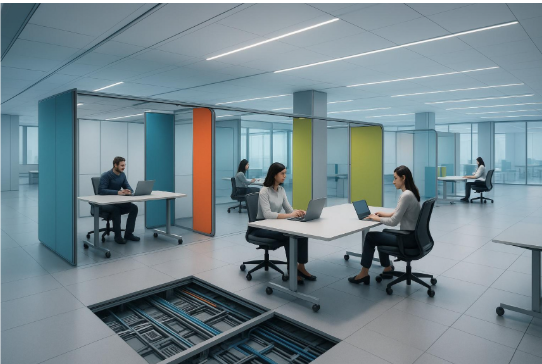
Flexibility today means much more than an open plan. It uses “loose-fit” ideas, where the inside layout can change quickly and simply. This can include raised access floors for easy wiring changes, modular furniture that moves easily, and hot-desking areas that support rotating teams. The aim is a space that feels planned and efficient whether ten people or two hundred are using it.
Flexibility also means support for different work styles. One floor might include quiet “library” spaces for focus work, busy “social hubs” for brainstorming, and tech-heavy “war rooms” for virtual meetings. This mix helps the office act as a useful tool for many kinds of tasks and roles.
Benefits of Adaptability for Tenants and Owners
For tenants, an adaptable workspace helps manage change. As teams grow, shrink, or shift focus, the ability to rearrange space without months of construction is highly valuable. It lowers capital spending over the lease term and helps the business react quickly to new conditions.
For owners, adaptability supports asset value. A building that can easily shift between standard offices, medical space, or light lab use is better able to handle market swings. This “future-ready” approach helps keep vacancy lower and supports steady performance, even as tenant types change.
How Modular Interiors Enable Rapid Change
The main tool for flexible workspaces is modular interior systems. Modular walls make it easy to add or remove offices and meeting rooms without the mess and waste of drywall. Many systems come pre-wired for power and data, so a full layout update can happen over a single weekend.
Modularity also reaches ceilings and lighting. Movable lighting tracks and acoustic panels can shift with new desk layouts, keeping comfort and performance high after changes. This quick response to new needs is a key sign of a truly modern commercial interior.
Exploring Modular and Prefabricated Construction Methods
Benefits for Speed, Quality, and Budget
Modular and prefabricated methods are now widely used. By building large parts of a project-such as bathroom pods, wall systems, or full room modules-in a factory, contractors can avoid many on-site delays. This can cut project time by 30% to 50%.
Quality often improves as well. Factory work allows tighter controls and frequent checks that are hard to match on a job site. This accuracy leads to better builds and fewer future repairs. From a cost angle, stable factory pricing helps reduce risk from material price swings and labor overruns.
How Prefabrication Improves Site Safety
One major but often overlooked benefit of prefabrication is better safety. Moving a large share of work off-site cuts the number of people on the active site, which lowers the chance of accidents. Factories also tend to be safer, with solid work platforms, good lighting, and machines that handle risky tasks.
Prefabrication also reduces on-site clutter. There are fewer deliveries and less waste. A cleaner, more orderly site helps safety staff keep stronger control, so final assembly and finishing work can happen under better, safer conditions.
Sustainable and Green Building Practices in Commercial Construction
Reducing Environmental Impact with Certified Materials
Sustainability has moved from “nice bonus” to core requirement. Developers are using more recycled and low-emission materials to cut embodied carbon. Examples include “green” concrete that absorbs CO2 and timber structures that store carbon, both of which change how buildings affect the climate.
Using certified products-such as those with Cradle to Cradle or Forest Stewardship Council (FSC) labels-helps keep supply chains responsible and efficient. These materials support the planet and improve indoor air by lowering VOCs often found in older building products.
Energy Efficiency Standards and Cost Savings
Higher energy prices have pushed efficiency to the top of the list for many owners. New commercial buildings now often include strong building envelopes, advanced insulation, and efficient glazing as basic features. Together, these limit heat gain and loss, reducing strain on HVAC systems and monthly bills.
Smart HVAC systems that use AI to predict heating and cooling needs can cut costs further. By adjusting energy use based on people in the space and outside weather, buildings can run efficiently without lowering comfort. Many of these upgrades pay off in just a few years through lower operating costs.
Role of Renewable Energy and Smart Resource Management
Leading commercial projects are now aiming for Net Zero performance. They do this by adding renewable energy into the design, such as solar-ready roofs or building-integrated photovoltaics (BIPV). These systems let the building make its own power and reduce risk from energy price swings.
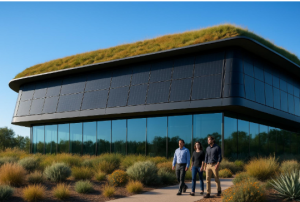
Smart resource use also includes saving water. Low-flow fixtures, greywater reuse, and drought-tolerant landscaping are becoming standard. Treating water as a limited resource, rather than something endless, sets a new level of environmental responsibility for commercial buildings.
Integrating Smart Technologies: Shaping Smarter Commercial Spaces
Popular Smart Systems in Modern Buildings
The Internet of Things (IoT) has changed building management. Modern commercial properties often have sensors tracking lighting, temperature, air quality, and occupancy. Automated lighting that adjusts based on daylight and room use is now common and cuts both energy use and costs.
Smart systems also improve tenant experience. Building apps let people book rooms, order services, or change the temperature at their desk from a phone. This level of control creates smoother daily routines and supports a tech-focused workforce.
How Data-Driven Design Improves Efficiency
Data now acts like a design tool. By studying occupancy and movement patterns, managers can adjust layouts to match real use. If data shows that one lounge is often empty while meeting rooms are always full, space can be reworked to meet demand.
Data also improves maintenance. Predictive tools can spot signs of future equipment problems so teams can fix issues before breakdowns happen. Instead of using fixed maintenance dates, service can match real wear and tear, cutting downtime and extra costs.
Security Enhancements with Automation and AI
Security has moved beyond simple locks and basic cameras to smart, AI-based systems. Biometric access, including facial recognition or fingerprint scans, is becoming more common in high-security buildings, giving better protection and smoother entry for approved users.
AI systems can now watch camera feeds and flag unusual actions or access issues in real time, alerting guards quickly. Linked platforms can also talk to other building systems-such as locking certain doors or leading people to exits in an emergency. This active, connected approach is a key feature of modern smart buildings.
Prioritizing Health and Wellness in Commercial Design
Promoting Indoor Air Quality and Natural Light
After recent global health events, indoor air quality (IAQ) has become a top concern. Many new buildings use advanced HVAC systems with HEPA filters and UV-C light cleaning. These systems do more than move air; they clean it, cutting pathogens and allergens and creating a healthier workplace.
Natural light is also a major part of wellness-focused design. Careful window layouts and light wells bring sunlight deeper into the building. This helps support healthy sleep cycles, improves mood, and boosts productivity. Daylighting is now seen as a key design element, not a luxury.
Biophilic Design Elements for Employee Wellbeing
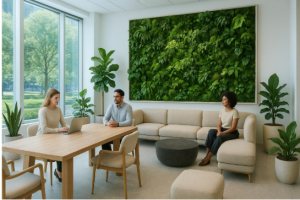
Biophilic design-bringing natural elements into buildings-is growing quickly. Common features include living green walls, indoor water features, and natural finishes like stone and reclaimed wood. Studies show these elements can reduce stress, lower heart rate, and support creative thinking.
Beyond looks, biophilic design creates a sense of connection to nature that many offices lack. By adding “nature” back into dense urban settings, developers are building places where people actually want to spend time, helping companies encourage staff to come into the office more often.
Touchless Technologies and Hygiene Innovations
The “touchless office” is now common. Automatic doors, voice-controlled elevators, and sensor-based faucets and dispensers all reduce contact with shared surfaces. This lowers germ spread and helps people feel safer at work.
Hygiene upgrades also include antimicrobial coatings on handles, counters, and other high-touch points. These finishes work constantly to kill bacteria and viruses. Combined with strong cleaning routines, they create a strong defense against illness indoors.
Fostering Collaboration: Community-Oriented and Mixed-Use Developments
Trends in Mixed-Use Urban Commercial Projects
Lines between work, home, and leisure are blending, and construction is following with more mixed-use projects. These developments bring together office space, housing, retail, and recreation in one active center. This “live-work-play” setup creates all-day activity, appeals to many tenant types, and can raise property values.
In these projects, commercial space often acts as the central feature. Shared amenities like rooftop gardens, gyms, and public plazas help build community and support social interaction. This approach is turning underused areas into busy, multi-purpose neighborhoods.
The ‘Third Space’ Approach to Community Building
The “Third Space” idea-spaces that are neither home nor a typical office-is shaping new designs. These are work-friendly spots like coffee bars, libraries, or lounge areas that feel relaxed but still support professional work. They offer a change of scene that can spark ideas and encourage casual networking.
Many new office buildings are including their own third spaces. By adding shared areas that look and feel more like hotel lobbies than corporate offices, developers give workers variety and a stronger sense of community. These spaces help build culture, especially in hybrid work models.
Aesthetic Innovation and Brand Identity in Commercial Architecture
Material Selection and Modern Design Trends
Design trends in 2026 often center on glass and aluminum systems. These allow clean, transparent exteriors that bring in light and views while keeping good structural strength. Slim-profile systems reduce visible frames, creating a smooth link between inside and outside.
New textures and finishes are also popular. Perforated metal screens can provide shade and visual interest, while large porcelain tiles can copy the look of natural stone. Materials are chosen for both appearance and performance, including long life and low upkeep.
How Architecture Reflects Company Identity
An office is often a company’s largest physical expression of its brand. Modern commercial design is used to show values and culture to both visitors and staff. A tech company might choose an industrial look with exposed steel and open ceilings to signal innovation, while a law firm may choose marble and dark wood to suggest stability and trust.
Unique lobbies and thoughtful interior finishes help create a strong, consistent brand experience from entry to office. As experts at https://novaconstructionservices.com/ often emphasize, by working closely with designers and builders, companies can shape spaces that truly match their identity and help them stand out.
Addressing Challenges in Commercial Construction
Adapting to Labor Shortages and Skilled Workforce Needs
The construction field is dealing with a shortage of skilled workers. To respond, many firms are using more automation and robotics. Semi-autonomous tools can handle repeat tasks like bricklaying or tying rebar, freeing human workers for more complex work and raising productivity.
Spending on training and upskilling also matters. Teaching new workers and existing staff tools like BIM and modular assembly helps build the workforce needed for advanced projects. This active approach to labor planning helps keep schedules and budgets on track.
Handling Economic and Regulatory Pressures
Economic ups and downs, including changing interest rates and material prices, continue to pressure projects. Teams are cutting risk through early value engineering and open talks with stakeholders. By finding savings during design, projects can stay realistic even as conditions shift.
Rules around environment and safety are getting stricter too. Dealing with many local codes and sustainability rules takes solid knowledge of current laws. Developers who succeed often treat these rules as guides for creating better, safer, more efficient buildings.
Upholding Safety Standards and Compliance
Safety is the base rule for any job site. In 2026, companies support safety with tools like wearables and drones. Wearable devices can track worker health signs and detect falls, while drones can inspect hard-to-reach areas such as roofs and facades, reducing risk for people.
Digital tools also make code compliance smoother. Building Information Modeling (BIM) supports clash detection, spotting safety or structural problems in the digital model before field work begins. This early check helps every project meet or exceed code from the start.
What’s Next for Commercial Construction Trends?
Predictions for Emerging Technologies and Materials
Looking ahead, 3D printing is set to change how we build. While it is now often used for small parts or special walls, it is quickly growing toward printing full building sections with high-performance concrete or recycled plastics. This could cut waste and give architects more design freedom.
We are also likely to see more “living” materials, such as products that repair their own cracks or shift transparency based on sunlight. These materials can improve durability and efficiency while lowering the need for manual repairs and long-term maintenance costs. AI will continue to move deeper into design, shaping buildings from the concept stage onward.
Long-Term Impacts on Urban Development
Today’s trends will shape tomorrow’s cities. As commercial spaces become more flexible and more mixed-use, urban areas will become more resilient and easier to walk. A strong focus on sustainability will create greener skylines, with buildings that play an active role in local ecosystems rather than just using resources.
Digital Twins-exact digital copies of real buildings-will likely become standard for city planning and property management. These models will help planners test how new projects affect traffic, wind, and energy systems before building begins, leading to smarter and more balanced growth. The future of commercial construction is about more than better offices; it is about building better, more sustainable cities for everyone.